The Building Cost Information Service (BCIS) is the leading provider of cost and carbon data to the UK built environment. Over 4,000 subscribing consultants, clients and contractors use BCIS products to control costs, manage budgets, mitigate risk and improve project performance. If you would like to speak with the team call us +44 0330 341 1000, email contactbcis@bcis.co.uk or fill in our demonstration form
Published: 17/09/2026
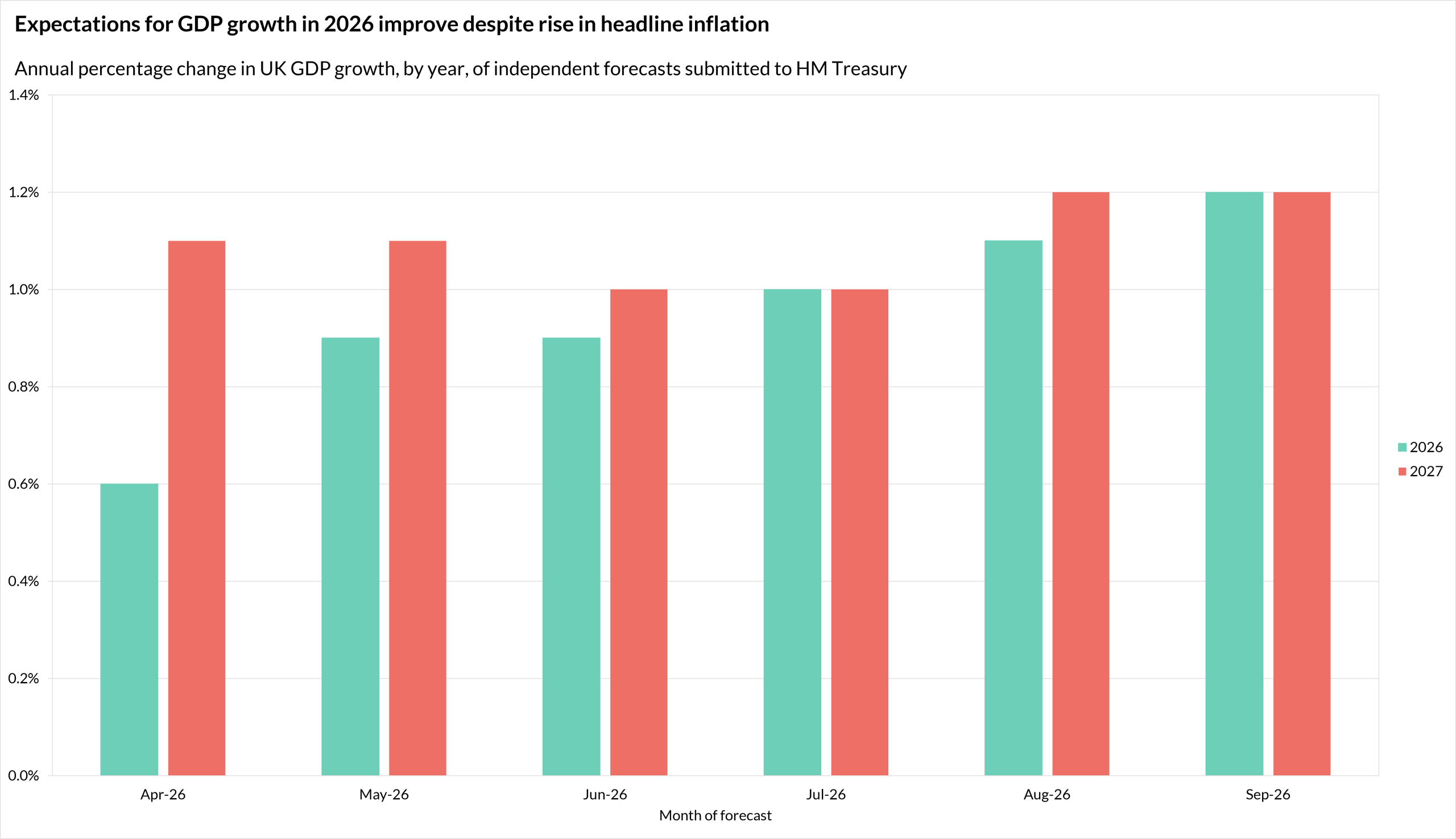
Growth predictions for UK economy in 2026 rise slightly to 1.2%
Independent economic forecasts received by HM Treasury in September point to a modest improvement in the outlook for UK economic growth in 2026(1).
The average of new independent forecasts indicates UK GDP growth of 1.2% in 2026, up slightly from 1.1% in August. Expectations for 2027 remained unchanged at 1.2%.
By comparison, GDP growth averaged closer to 2% through much of the 2010s. Since the pandemic, growth has settled nearer to 1% per year, reflecting the UK’s weaker post-COVID recovery.
Source: HM Treasury – Forecasts for the UK economy: August 2026
Sam Parkin, senior economist at BCIS, said: ‘The slight upward revision to the 2026 growth forecast is welcome, but economic headwinds persist, namely increased energy costs, which are curtailing future growth. The Autumn Budget could provide some stimulus for the economy but the Prime Minister has hinted it will not be strictly expansionary.
‘In a volatile world, it is wise for contractors to safeguard against increasing costs. However, even with prudent spending, demand could ultimately be the driver that determines costs and viability. It remains important for the government to maintain its funding commitments and use the levers available to stimulate demand. Construction has always had an integral role to play in supporting wider economic growth, but that depends on creating better conditions for projects to move forward.’
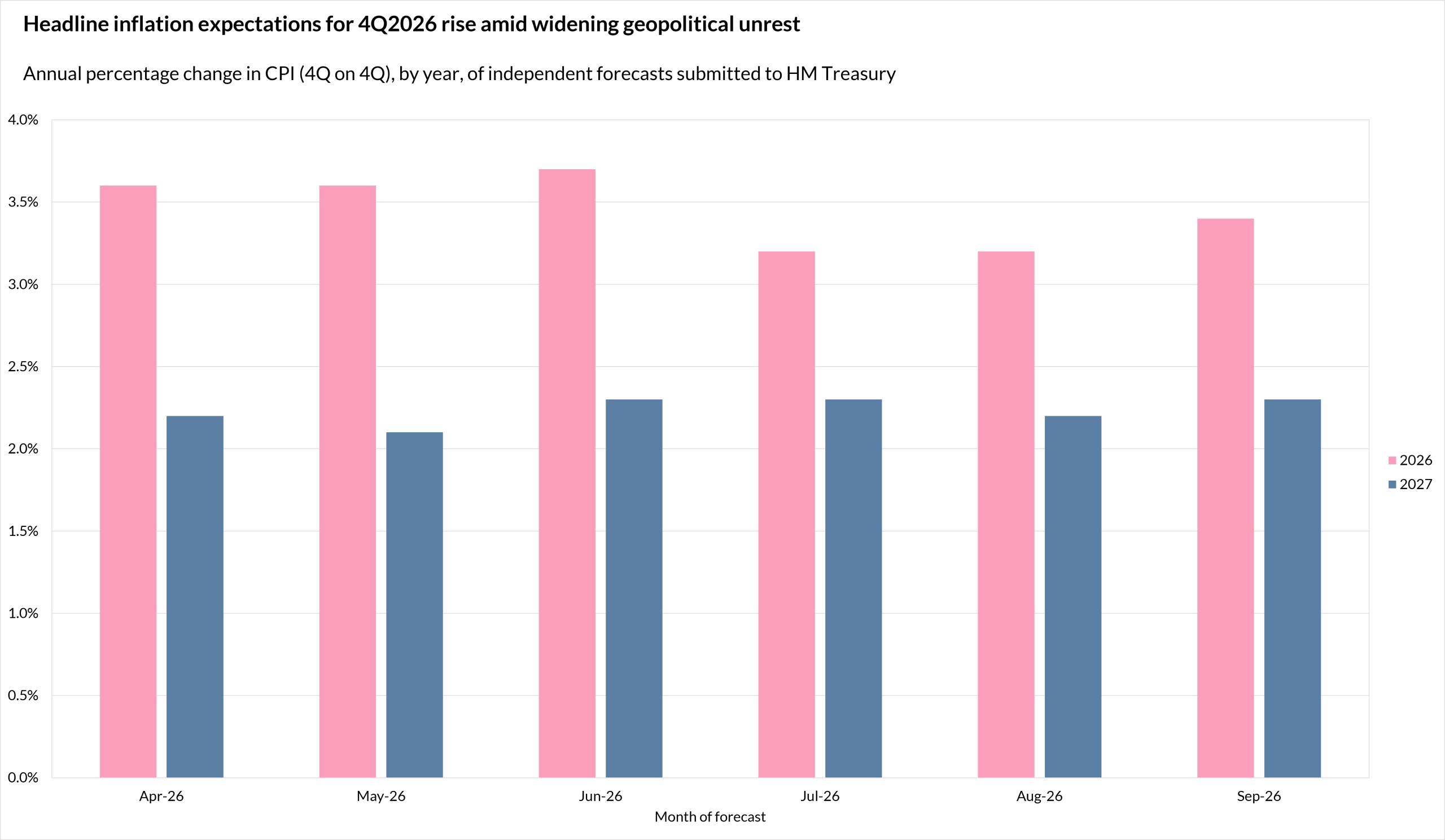
The forecasts published by the Treasury also suggest CPI inflation will average 3.4% in 4Q2026, unchanged from the previous month, before easing to 2.3% annual inflation by the final quarter of 2027, up from 2.2% in August’s forecasts roundup.
Source: HM Treasury – Forecasts for the UK economy: August 2026
The Bank of England, however, expects inflation to reach 3.75% by the end of the year, suggesting strong upside risk on inflation in the near term. BCIS forecasts inflation to surpass 3.4% by the end of the year and potentially reach 4% by December.
‘Speculation on another energy price cap increase in January will only further and prolong inflation into 2027,’ Parkin added.
‘It is unlikely we will see any easing until mid-to-late 2027, with a base level of inflation increasing each time the energy price cap rises.
‘Fundamentally, a reduction in inflation is likely next year but it’s dependent on the geopolitical environment in the Middle East. We’re not seeing any signs of tensions between the US and Iran easing. In fact, the opposite is true, with tensions between Iran-backed Houthi forces and Saudi Arabia escalating, particularly around the Bab al-Mandab Strait.
‘At the moment, forecasts for an improvement in headline inflation, and the capacity for monetary policy to move towards lower interest rates, must be treated with cautious optimism.’
To keep up to date with the latest industry news and insights from BCIS, register for our newsletter here.
(1) HM Treasury – Forecast for the UK economy - here