BCIS CapX provides a comprehensive, detailed and easy-to-use method of measuring cost movement for building and civil engineering. Widely used in the construction and infrastructure sector to help fairly allocate risk between the client and sub-contractors.
Published: 15/07/2026
The Department for Business and Trade (DBT) publishes annual data on payment practices by large businesses in the UK(1). These figures are based on data reported by businesses under The Payment Practices and Performance Reporting Regulations 2017. The regulations require large UK businesses to report on their payment practices, policies and performance twice-yearly.
Large businesses must report if they exceed at least two of the following thresholds on their last two balance sheet dates: annual turnover of more than £54 million, a balance sheet total of more than £27 million and an average of more than 250 employees(2).
Large construction firms paid one in seven invoices late in 2025
Large construction businesses paid 14%, or around one in seven, of invoices late in 2025, according to new data from the Department for Business and Trade (DBT). This was unchanged from 2024.
The highest proportion of late payments was recorded in the manufacturing sector, where 21% of invoices were paid late, followed by the water supply, sewerage, waste management and remediation activities sector, at 18.5%.
Across all large businesses, 15% of invoices were paid late in 2025, down from 25% in 2018. Construction has also seen a marked improvement over the same period, with the proportion of late payments falling by 13 percentage points since 2018.
DBT data show that large construction businesses took a median of 33 days to pay invoices in 2025, unchanged from 2024 and down from 40 days in 2018.
This was the eighth-longest median payment time of any sector. Across all large businesses, the median payment time was 32 days.
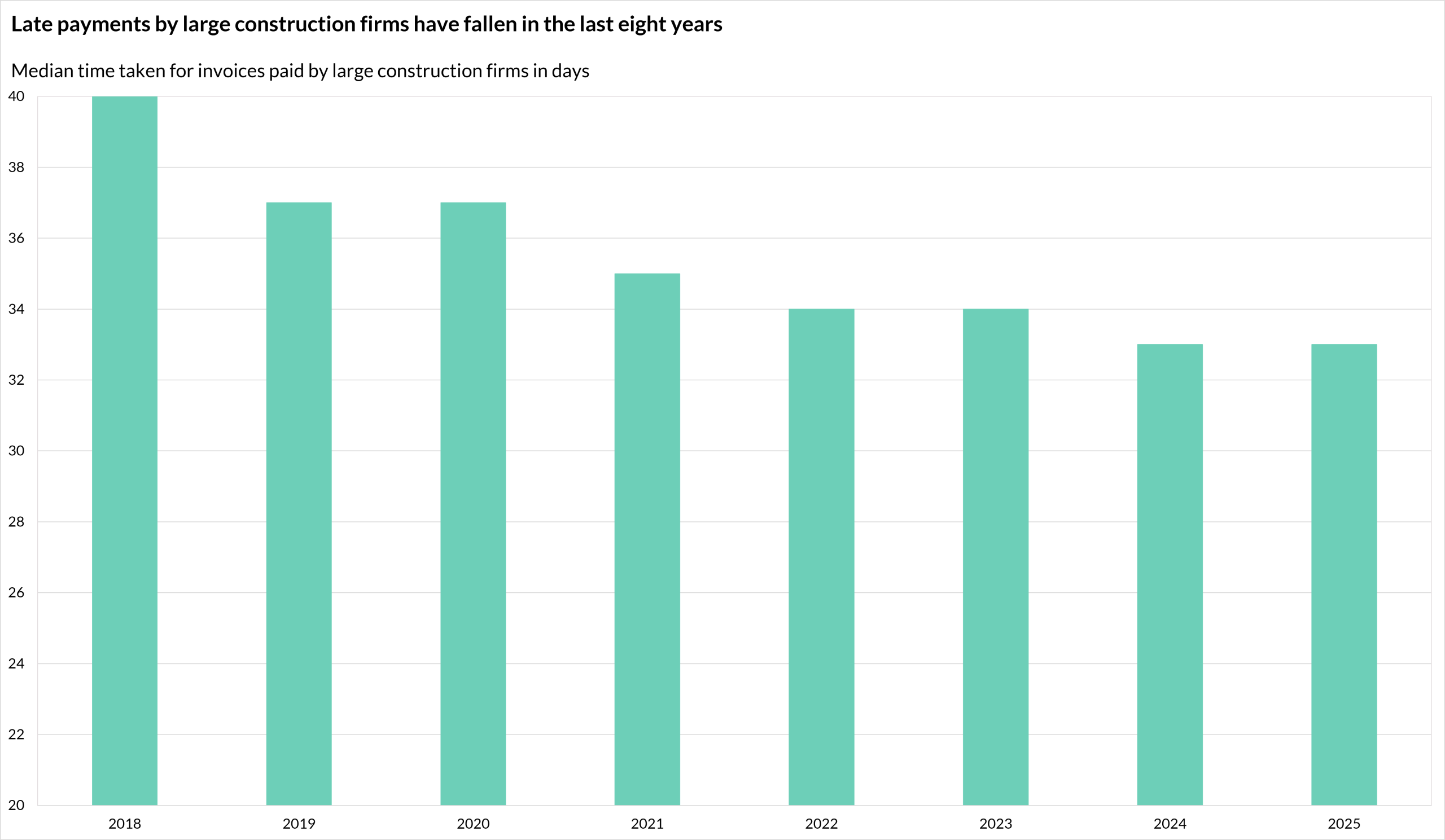
Source: DBT – Large businesses’ payment practices and performance statistics 2025: reference table, Table 6
Dr David Crosthwaite, chief economist at BCIS, said: ‘It’s encouraging to see a decline in both the proportion of late payments in the construction sector and the time businesses are taking to pay their suppliers. I expect new reforms designed to discourage late payments will help drive these figures down further, improving cash flow for smaller suppliers at a time when cost pressures remain significant.
‘These changes are being driven through the Commercial Payments Bill, which is currently moving through the House of Lords. If passed, measures will include a 60-day cap on payments, mandating interest on late payments at 8% above the Bank of England base rate and new, stronger powers for the Small Business Commissioner.
‘While these reforms are likely to improve payment practices, they could also present challenges for clients and contractors. Retentions have traditionally been used as a way of managing quality and ensuring defects are rectified. Removing retention clauses may increase project costs, as clients and contractors may need to adopt alternative forms of security or secure additional working capital to manage cash flow and project risk.
‘Construction is all about balancing risk and there is rarely a perfect solution. However, smaller firms and subcontractors are often disproportionately vulnerable to insolvency because of late payments, cash flow pressures and demand challenges. If these reforms improve payment practices and strengthen cash flow across the supply chain, they should ultimately benefit the resilience of the wider construction sector.’
For the first time, DBT data show the proportion of invoices paid late by value across different sectors.
In 2025, late payments accounted for 13% of the total value of invoices paid by large construction firms, compared with 14% across all businesses.
To keep up to date with the latest industry news and insights from BCIS, register for our newsletter here.